July 26, 2026 · 3,469 words
CTE Pathways to Careers: How Support Systems Turn Credentials Into Careers
Design effective CTE pathways to careers with Future1 Community. Learn how designed support systems transform student outcomes from classroom skills to lasting professional success.
Strong Career and Technical Education programs prepare students with valuable academic, technical, and workplace skills. Strong support systems help students turn that preparation into employment, retention, advancement, and long-term career success.
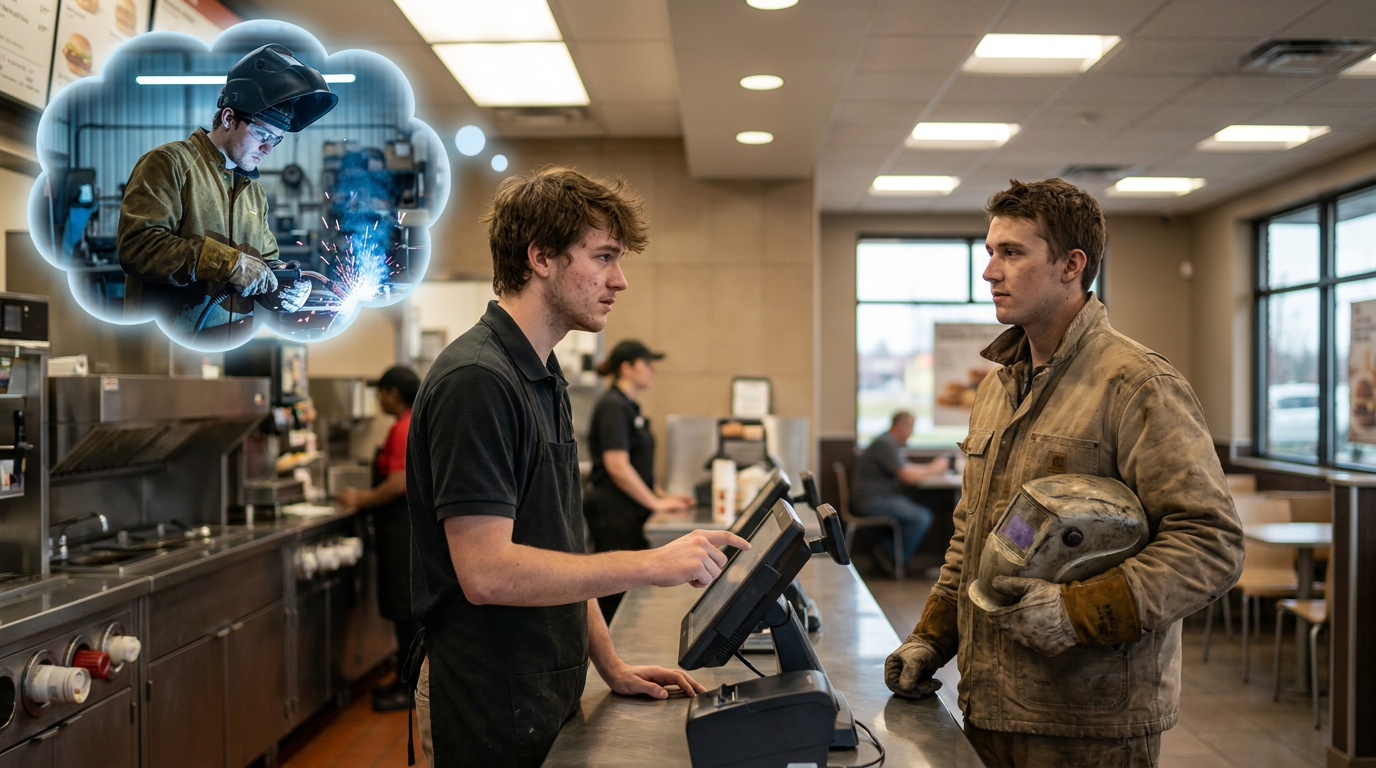
Imagine a student who completes a welding pathway, earns an industry-recognized credential, and walks across the graduation stage feeling prepared for the future.
Three months later, he is working in a job unrelated to his training.
He did not suddenly lose his ambition. His instructors did not fail to teach him. The credential did not lose its value.
He simply reached the end of the program without a clear connection to the next opportunity. No one helped him identify employers, understand hiring requirements, prepare for interviews, or navigate the transition from school into the industry.
He completed the pathway. No one completed the handoff.
This is one of the most overlooked challenges facing Career and Technical Education.
Schools, districts, colleges, employers, and workforce programs are investing in strong curricula, modern equipment, industry credentials, work-based learning, and career-connected experiences. Those investments matter.
But preparing students for careers and helping them reach those careers are not the same outcome.
A student can complete every course and still lack a roadmap. A student can earn a credential and still lack employer relationships. A student can participate in work-based learning and still be unsure what to do after graduation.
The problem is not always the quality of the CTE program.
It is often the support system surrounding the transition from preparation to opportunity.
At Future1 Community, we believe no one succeeds alone. Students need more than access to a pathway. They need coordinated support that helps them understand what comes next, build meaningful relationships, navigate barriers, and continue moving after the structured program ends.
What Is a CTE Pathway to a Career?
A CTE pathway to a career is a connected sequence of academic learning, technical instruction, career exploration, work-based learning, employer engagement, industry credentials, and student support that prepares a learner for employment or further education in a particular field.
The most important word in that definition is connected.
A collection of courses is not automatically a complete career pathway. A credential is not automatically a career outcome. An internship is not automatically a successful transition.
A strong CTE pathway connects what students learn in the classroom to the experiences, relationships, decisions, and next steps required in the workplace.
Career pathways may include:
Career awareness and exploration
Academic and technical instruction
Industry-recognized credentials
Dual or concurrent enrollment
Workplace tours and job shadowing
Internships and apprenticeships
Employer mentorship
Job-search and interview preparation
Postsecondary navigation
Follow-up after program completion
These experiences become more valuable when they operate as parts of one coordinated journey rather than as separate activities.
The U.S. Department of Education’s Office of Career, Technical, and Adult Education describes work-based learning as an instructional strategy that strengthens classroom learning by connecting it to the workplace. Its Work-Based Learning Toolkit identifies three important components of comprehensive programs: alignment between classroom and workplace learning, application of academic and technical skills in real work settings, and support from classroom or workplace mentors. This reinforces an important principle for CTE leaders. Work-based learning is strongest when the experience, the curriculum, and the people supporting the student are intentionally connected.
The Missing Handoff in CTE Pathways to Careers
Most CTE programs are built with strong intentions.
Educators want students to succeed. Counselors want students to make informed decisions. Employers want access to prepared talent. Families want young people to build stable futures. Workforce organizations want training to lead to employment.
Everyone may care about the outcome, but the system can still lose the student.
That usually happens during a transition.
Career exposure must transition into informed career selection. Classroom instruction must transition into technical confidence. Training must transition into credential attainment. Credentials must transition into employer relationships. Employer relationships must transition into employment. Employment must transition into retention and advancement.
Every transition creates an opportunity for movement.
Every transition also creates a place where someone can quietly fall through the cracks.
The student may not know what happens next. The employer may not know which students are ready. The instructor may assume the counselor is following up. The counselor may assume the work-based learning coordinator owns the transition. The workforce partner may not know the student needs help.
Everyone is doing their job, but no one is completing the handoff.
Why Strong CTE Programs Can Still Produce Uneven Outcomes
Career and Technical Education can provide meaningful preparation for college, careers, and economic mobility. However, the experiences available to students are not always equally connected or equally comprehensive.
A national survey reported by the National Center for Education Statistics found that during the 2016–17 school year, 77 percent of districts offering high school CTE programs included activities such as internships, clinical experiences, practicums, cooperative education, or on-the-job training. Sixty-five percent reported mentoring by local employers, while 31 percent reported apprenticeships or pre-apprenticeships. Because these figures come from the 2016–17 school year, they should be treated as a dated national baseline rather than a description of every program today. They still illustrate that schools have historically offered different combinations of career-connected experiences and employer support.
One student may attend a school where employers regularly visit classrooms, mentors help students plan their next steps, internships are built into the program, and staff maintain relationships with graduates.
Another student may complete a similar program but receive disconnected pieces of support. The school may have employer partners, counselors, workforce resources, and career information, but the student must figure out how those pieces fit together.
The difference is not always the amount of effort being made.
The difference is often how well that effort is coordinated around the student.
Five Support Gaps That Weaken CTE Career Pathways
1. The pathway ends when the program ends
Students often receive the most structured support while they are enrolled.
Instructors remind them about assignments. Counselors help them choose courses. Program leaders communicate deadlines. Staff members answer questions and solve problems.
Then the student graduates, earns the credential, or finishes the training, and much of that structure disappears.
Unfortunately, the weeks and months after program completion are often when students face their most complex decisions.
They may need to identify employers, compare job opportunities, prepare applications, complete interviews, arrange transportation, understand workplace expectations, navigate financial aid, or decide whether additional education is required.
When the pathway ends at graduation, students are expected to navigate the final transition alone.
2. Employer partnerships exist, but students cannot feel them
A school may have dozens of employer partners.
Those employers may serve on advisory boards, donate equipment, review curricula, sponsor events, or provide occasional workplace tours. Those relationships are valuable.
But an employer partnership listed on a website is not the same as an employer relationship in a student’s life.
Students benefit most when employers become visible and active throughout the pathway. That may include classroom presentations, workplace tours, mentorship, real-world projects, job shadowing, interview preparation, internships, apprenticeships, paid work experiences, and direct introductions to hiring managers.
Employer partnerships become more powerful when students know the people behind the company names.
The federal Work-Based Learning Toolkit also emphasizes relationships with industry and community professionals, ongoing mentorship, and monitoring by instructors, coordinators, or workplace supervisors. In other words, a high-quality experience is not defined only by placing a student in a workplace. It also depends on the support surrounding the placement.
3. Support begins after the student is already struggling
Many organizations provide support, but the support is reactive.
A student misses several deadlines before someone checks in. A graduate stops responding before someone asks what barrier appeared. An employer reports a problem before additional workplace support is provided.
Reactive support waits for the problem to become visible.
Proactive support identifies where students are likely to struggle and places guidance, relationships, and resources at those points in advance.
The goal is not to remove every challenge from the student’s journey.
The goal is to prevent predictable barriers from becoming permanent exits.
4. No one clearly owns the transition
Several people may care about a student’s success without anyone being clearly responsible for the next step.
The instructor believes the counselor is following up. The counselor believes the employer liaison owns the connection. The employer assumes the student knows how to apply. The student assumes someone will explain the process.
This is how students disappear between departments and organizations.
Shared responsibility is important.
Unclear ownership is dangerous.
Every major transition needs a clearly identified person or role responsible for making sure the handoff is completed.
At Future1 Community, we call this person or role a Support Owner.
A Support Owner does not perform every task for the student. The role ensures that the student receives clear information, appropriate guidance, timely connections, and follow-up during a particular stage of the pathway.
5. Programs measure completion but not movement
Enrollment, attendance, graduation, and credential attainment are important measures.
They tell leaders whether students entered and completed the program. They do not always reveal whether students reached the career outcome at the end of it.
Under Perkins V, states report annually on core indicators for CTE concentrators. At the secondary level, those indicators include graduation, academic proficiency, post-program placement, participation in work-based learning or other quality measures, credential attainment, postsecondary credit attainment, and participation in programs leading to nontraditional fields. States must also disaggregate performance data across student groups and special populations. This federal accountability structure demonstrates that CTE success is intended to include outcomes beyond simple program enrollment.
Local CTE programs should also be able to answer practical questions:
Did students enter employment connected to their training?
How long did the transition take?
Where did students become stuck?
Did employer relationships lead to real opportunities?
Did graduates receive follow-up support?
Were students retained after placement?
Did they continue building skills and advancing?
Which students completed the program but never reached the intended outcome?
Completion tells us that the student finished.
Movement tells us whether the pathway worked.
Support Gaps Are Often Mistaken for Motivation Gaps
When a student misses a deadline, stops communicating, fails to contact an employer, or accepts work unrelated to their training, it may appear that the student lacks motivation.
Sometimes personal responsibility is part of the situation.
Students must participate, communicate, make decisions, and take action.
But before concluding that a student does not care, we should examine the support surrounding the student.
Did the student understand the next step?
Was the process clearly explained?
Did the student know which person to contact?
Was the student introduced to employers?
Were transportation, financial, scheduling, or family barriers identified?
Did someone notice when the student began to disconnect?
Did support arrive before the student became overwhelmed?
What looks like a student lacking initiative may actually be a student lacking a clear and coordinated support map.
Determination matters.
But determination should not have to perform the work of an entire support system.
The CTE Pathway Support Test
Schools, districts, colleges, employers, and workforce programs can begin evaluating their CTE pathways to careers by asking seven questions.
1. What outcome is the pathway designed to produce?
The answer cannot stop at program completion.
Is the desired outcome an industry credential, employment, apprenticeship placement, postsecondary enrollment, retention, career advancement, or a combination of those outcomes?
The organization must define what success looks like after the student leaves the classroom.
Without a clearly defined outcome, different departments and partners may support different destinations.
2. Can students explain their next three steps?
A student who wants to become a pilot, nurse, veterinary assistant, electrician, welder, cybersecurity technician, or medical professional should have more than a dream.
The student should be able to describe the next three steps required to move toward that career.
When students cannot explain what comes next, the pathway may be clear to the organization but invisible to the learner.
3. Where are students most likely to get stuck?
Map every major transition:
Recruitment to enrollment
Enrollment to training
Training to credential attainment
Credential attainment to work-based learning
Work-based learning to employment
Employment to retention and advancement
Each transition should be examined for confusion, delays, barriers, disengagement, and unclear ownership.
The Office of Career, Technical, and Adult Education recommends collecting information not only about participation in work-based learning, but also about placement characteristics, duration, wages or credits earned, skill gains, and resulting outcomes. That type of information can help programs move from simply counting experiences to improving their quality and impact.
4. Who owns each handoff?
A Support Owner should be identified for every critical stage.
That person does not complete every task for the student. The Support Owner makes sure students receive timely information, appropriate guidance, relevant connections, and follow-up.
A pathway with shared support still needs clear ownership.
5. Are employer relationships designed into the student experience?
Employers should not appear only when the program needs donations, advisory board members, guest speakers, or job openings.
They can help students understand industries, explore occupations, practice workplace skills, build professional relationships, and prepare for employment before graduation.
The earlier the relationship begins, the less unfamiliar the transition becomes.
6. What support continues after completion?
A credential ceremony should not mark the end of the relationship.
Programs can establish a structured 90-day follow-up rhythm that begins before graduation and continues through the first critical months afterward.
Follow-up may include job-search assistance, employer introductions, application support, interview practice, transportation resources, financial guidance, postsecondary navigation, onboarding assistance, and early-employment check-ins.
The exact schedule may vary.
Leaving follow-up to chance should not.
7. Would the pathway survive if one exceptional person left?
Many strong programs are held together by one deeply committed instructor, counselor, coordinator, or employer partner.
That person remembers every deadline, makes every introduction, solves every emergency, and follows up with every student.
Their work should be celebrated.
But the pathway should not depend entirely on their heroics.
If one retirement, resignation, illness, or job change causes the process to fall apart, the organization does not yet have a sustainable support system.
It has a hero.
Support, not heroes.
Building a CTE Support Map
A CTE Support Map makes the support surrounding the pathway visible.
It shows the relationship between the student’s desired outcome and the people, resources, actions, responsibilities, and milestones required to reach it.
A practical Support Map should identify:
The desired career outcome
The students moving through the pathway
The major stages and transitions
Existing support and resources
Employer and community partners
Potential barriers
Support gaps
Support Owners
Communication responsibilities
Follow-up expectations
Measures of progress
The map should answer the questions students are often left to solve alone.
Who can help me explore careers?
Who coordinates work-based learning?
Who helps me prepare for interviews?
Who can explain financial aid?
Who connects me with employers?
Who follows up after graduation?
Who should I contact when something goes wrong?
When support becomes visible, it becomes easier to access, coordinate, measure, and improve.
Preparing Students for AI-Transformed Careers
AI tools are becoming part of how organizations communicate, analyze information, solve problems, manage operations, and deliver services.
CTE students therefore need more than general exposure to AI.
They need role-based support that helps them understand how AI may be used in their chosen industries, how to evaluate AI-generated information, how to protect sensitive data, when professional judgment is required, and how to use emerging technologies responsibly.
AI adoption should be treated as a support journey, not simply a tool rollout.
Students need opportunities to practice, ask questions, receive feedback, and connect AI use to real workplace responsibilities.
Educators also need support. They should not be expected to become immediate experts in every emerging technology without training, guidance, policies, time to practice, and access to knowledgeable partners.
AI can strengthen a support system.
It cannot replace the relationships, judgment, accountability, and human responsibility required to help students succeed.
What Is Support Intelligence in CTE?
Support Intelligence is the ability to understand, design, coordinate, and improve the support surrounding a specific outcome.
In a CTE pathway, Support Intelligence helps leaders see:
What students are trying to reach
What support already exists
Where support becomes fragmented
Which students are least likely to receive it
Who owns each stage
How educators, employers, families, and partners coordinate
Where students are becoming stuck
Whether support is producing movement
Support Intelligence does not replace instructors, counselors, employers, workforce partners, or families.
It helps them operate as a coordinated support system rather than as disconnected sources of assistance.
How Future1 Community Helps Strengthen CTE Pathways
Future1 Community helps schools, districts, workforce programs, employers, and community partners design Support Intelligence Systems for workforce development and career readiness.
The process begins with one question:
Support for what?
An organization must first define the outcome it wants the pathway to produce.
Future1 then helps the organization understand its current reality, map the people and resources involved, identify invisible support gaps, clarify ownership, coordinate responsibilities, build a Support Map, establish follow-up rhythms, and measure whether students are moving toward the intended outcome.
The goal is not to place more pressure on educators.
It is to build support around educators and students so success does not depend on scattered effort or individual heroics.
From Career Preparation to Career Movement
A strong CTE pathway does more than teach students how to perform a job.
It helps students understand what is possible. It gives them a clear roadmap. It connects them to people working in the industry. It provides meaningful experiences before graduation. It prepares them for applications, interviews, workplace expectations, and emerging technologies.
It anticipates barriers.
It assigns ownership.
It continues supporting students through critical transitions.
In a designed system, students know what comes next. Educators understand their responsibilities. Employers know how they contribute. Families know how to reinforce the pathway. Community and workforce partners know when their support is needed.
Leaders can see where students are getting stuck and strengthen the system before more students fall through the same gaps.
Success becomes less dependent on luck, family connections, insider knowledge, or one heroic staff member.
It becomes the predictable result of support intentionally designed around the outcome.
Building CTE Pathways Students Can Actually Complete
The future of Career and Technical Education is not simply about creating more programs.
It is about making sure existing programs lead somewhere.
Students should not complete years of training only to be left alone during the most important transition. They should not have to reverse-engineer a career pathway after graduation. They should not need personal connections or insider knowledge to access opportunities that were supposed to be part of their education.
People do not need more pressure.
They need better support.
Programs prepare students.
Support systems help students reach the outcome.
The goal is not simply to offer a pathway.
The goal is to make sure students can reach the career at the end of it.
Is your CTE program preparing students for careers but losing some of them during the handoff?
Start by mapping where support ends, who owns each transition, and where students are being expected to navigate alone.
Future1 Community helps organizations transform scattered support into coordinated systems that move students from classroom preparation into meaningful careers.
Frequently Asked Questions
What is a CTE pathway to a career?
A CTE pathway to a career is a connected sequence of academic instruction, technical training, career exploration, work-based learning, credentials, employer engagement, and student support that prepares learners for employment or further education in a particular industry.
Why are support systems important in CTE programs?
Support systems help students navigate career decisions, employer relationships, applications, interviews, financial barriers, postsecondary transitions, onboarding, and early employment. Without coordinated support, students may complete their training but fail to reach the career outcome the program was designed to produce.
What is a Support Owner in a CTE pathway?
A Support Owner is a clearly identified person or role responsible for making sure students receive the guidance, resources, relationships, and follow-up required during a specific stage of the pathway.
What is a CTE Support Map?
A CTE Support Map is a visual representation of the desired outcome, people, resources, milestones, responsibilities, and support surrounding a student’s career pathway. It helps students and staff understand who provides support, when that support should appear, and how different roles connect.
How can employers strengthen CTE pathways to careers?
Employers can provide career exposure, mentorship, workplace tours, job shadowing, real-world projects, internships, apprenticeships, interview practice, curriculum guidance, and direct employment opportunities. Employer engagement is most effective when it is built into the pathway rather than added only at graduation.
What should CTE programs measure?
CTE programs should measure enrollment, completion, credentials, work-based learning participation, successful transitions, employment related to training, employer engagement, retention, advancement, and the points where students disengage or require additional support.
How can AI support CTE pathways?
AI can help students explore careers, understand occupational requirements, practice interviews, improve professional communication, organize portfolios, and identify possible next steps. It can also help program leaders identify support gaps, coordinate resources, and examine patterns in student experiences. AI should strengthen human support and professional judgment, not replace them.
Sources and Further Reading
U.S. Department of Education, Office of Career, Technical, and Adult Education: Work-Based Learning Toolkit. This resource explains the major components of comprehensive work-based learning, including alignment between classroom and workplace learning, practical application of skills, employer engagement, data collection, and mentorship.
National Center for Education Statistics: Career and Technical Education Fast Facts. This resource summarizes findings from the 2016–17 national survey of public school districts, including the prevalence of CTE programs, career pathway structures, dual-credit opportunities, employer mentoring, internships, apprenticeships, and other work-based learning activities.
Office of Career, Technical, and Adult Education: Perkins V Indicators of Performance. This resource outlines the core performance indicators states report for CTE concentrators, including graduation, academic proficiency, post-program placement, credential attainment, work-based learning, and participation in nontraditional fields.
Perkins V Accountability Requirements. The federal accountability provisions establish state and local performance systems, require annual reporting, and call for data to be examined across student groups, special populations, and CTE programs or career clusters.
Perkins State Plans and Data Explorer. This federal resource allows practitioners, researchers, and community stakeholders to explore state CTE plans, enrollment information, and reported performance data under Perkins V
Ready to build your support system?
Start with the support gap. Then build the support system.